Book of Psalms
PSALM XCI.
George Burgess
Whoe'er in God's pavilion deep
His peaceful home has made,
Shall still his soul in safety keep
Beneath th' Almighty's shade.
O Lord most High, I cry to thee,
'Thou art my hope and tow'r;
To thee my trusting heart shall flee
In danger's stormy hour.'
The Lord shall hear his servant's pray'r,
And guide the faithful feet,
To shun the secret fowler's snare,
The plague's devouring heat.
Beneath his mercy's downy wing
Thy faith shall find its rest:
His truth shall shield and buckler fling
Around thy cheerful breast.
Thou shalt not fear the evening blight,
The daily shaft nor bow;
The pest that walks at dead of night,
The noonday slaughter's blow.
A thousand on thy right shall lie,
Ten thousand at thy side;
But thou shalt see th' ungodly die,
And thou unharm'd abide.
Because thou mad'st the Lord thy dread,
Thy hope and shelt'ring dome,
No ill shall strike thy guarded head,
No plague approach thy home.
For he shall charge his angel bands
To keep thy pathway lone;
And, lifted on their gentle hands,
Thou shalt not touch a stone.
The lion's lair, the adder's brake,
Thy fearless heel shall tread,
And trample down the coiling snake,
And spurn the monster's bed.
'Because to mine own name he gave
His stedfast fear and love,
I, in his need, will speed to save,
And plant his feet above.
My ear shall hear his suppliant voice,
My lips his praise decree:
In length of days shall such rejoice,
And my salvation see.'
Authors:
Psalms:
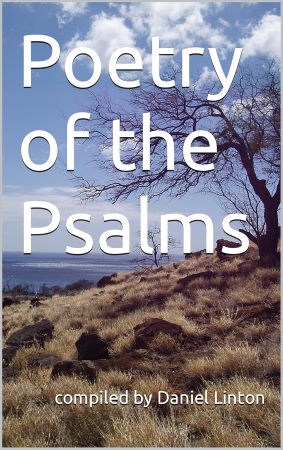
Poetry of the Psalms
The "Poetry of the Psalms" is a collection of poems expressing the struggles, fears, anger, joy and love revealed in the Psalms of the Bible. They were written over hundreds of years by various authors, including Isaac Watts, Charles Wesley, George Burgess, Charles Spurgeon, Abraham Coles, Augustus Toplady, Tate and Brady.
Order from Amazon